

You are here
Back to topPower Module Design Challenges and Solutions for Autonomous Wireless Charging Stations
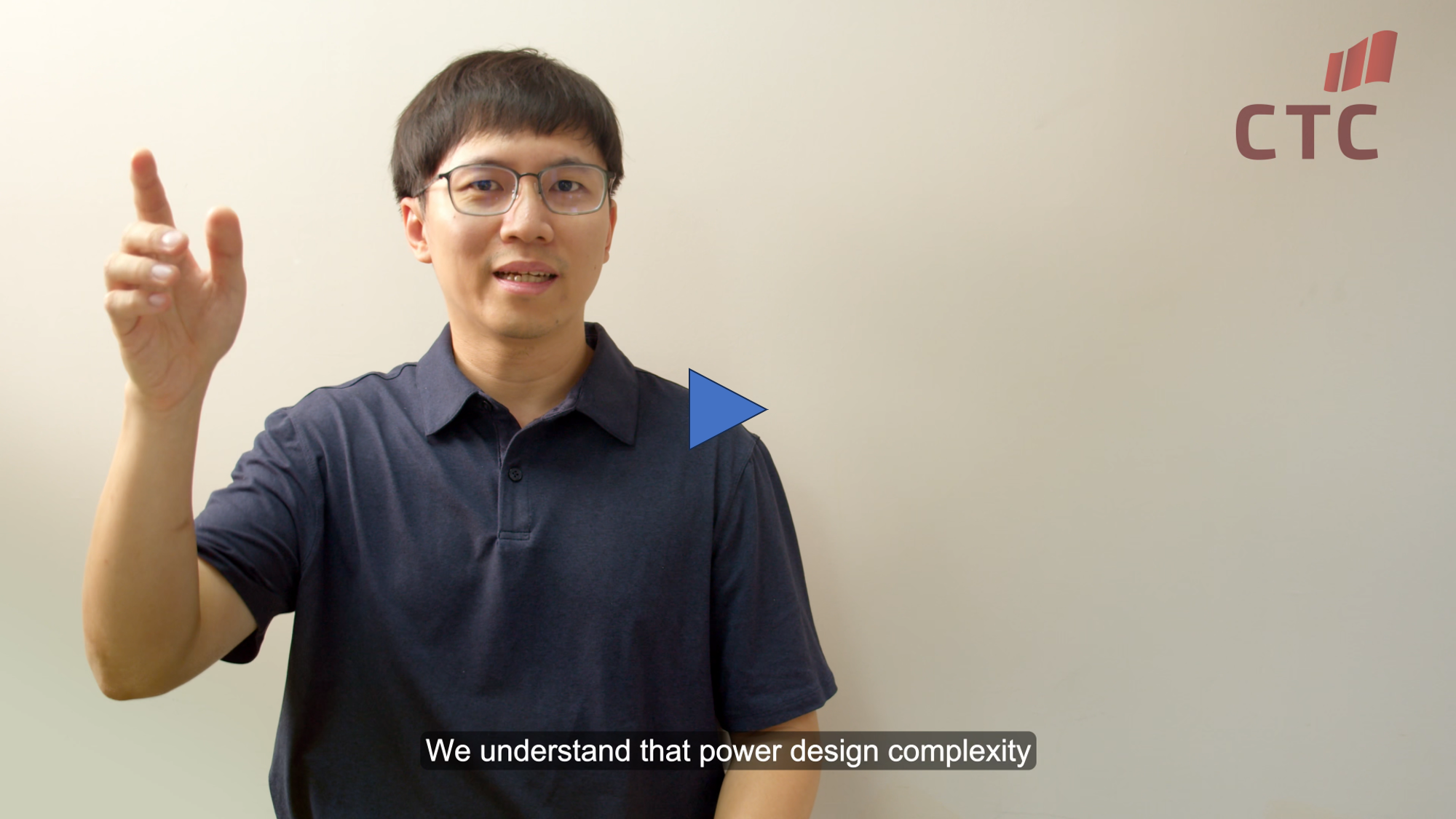
This video focuses on wireless charging trends for mobile robots, outlining the key power modules in the system and demonstrating how they ensure overall reliability through comprehensive protection measures and robust power delivery.
Before diving into the power modules, let’s first examine the real-world deployment challenges. In smart factories, where multiple charging stations are installed in close proximity, magnetic coupling makes EMI more difficult to control. Dust accumulation and restricted airflow can lead to heat buildup, which further amplifies electrical noise and interference—posing additional risks to wireless charging stability.
With these considerations in mind, let’s now turn to the system architecture. Upon AC input, the protection circuitry suppresses surges and EMI. The power then passes through the AC-DC and DC-DC stages to establish a regulated DC bus. Based on monitored system data, the digital processing unit generates control signals for the gate drivers, which manage high-frequency switching in the HF inverter. Finally, power is transferred through the transmitter via magnetically coupled resonance. Therefore, a modular solution that integrates AC-DC, DC-DC, and gate driver power supplies represents a key technical enabler for next-generation wireless charging stations.
In practice, wireless charging stations operate in standby or light-load conditions for most of the time. Therefore, the primary AC-DC stage should maintain standby power consumption below 0.5 W and achieve light-load efficiency above 80% to prevent energy loss. In addition, selecting modules with integrated PMBus support enables real-time monitoring, which is essential for predictive maintenance.
To handle rapid load transients during active charging, fast DC-DC transient response is critical. Modules with a wide adjustable output range are recommended to dynamically regulate the front-end voltage in response to resonant variations, ensuring that the high-frequency inverter operates at its optimal point.
Driven by multi-device charging and high-frequency switching demands, gate driver power solutions are evolving to deliver at least 3W per channel, 5kVDC isolation, and coupling capacitance below 3pF. These advancements meet the stringent requirements of third-generation semiconductors, enabling the next generation of charging networks.
We understand that power design complexity is often a major factor in shortening your time-to-market for wireless charging systems. As a dependable technical partner, we provide ready-to-use power modules that reduce integration risk and speed up validation.
CTC is service provider for high-end power modules (DC to DC Converter and AC to DC Converter) for critical applications worldwide since 1987. We aim to be business generator and a virtual business unit. CTC is your own team with 35 years of experience for a strong business program from market research, product definition & development, supply chain management and total technical services.
CTC is the only corporation certificated with ISO-9001, IATF-16949, ISO22613(IRIS), and ESD/ANSI-2020. We can 100% ensure not only the product, but also our workflow and service to match quality management system for every high-end application from the very beginning. From design to manufacturing and technical support, every single detail is operated under highest standard.